How to Attract Guests to a Restaurant: 12 Tactics That Work in Serbia (2026)
12 proven tactics for filling more tables — Google Business Profile, online reservations, and loyalty programs. Real examples from Niš and Belgrade.
Change history (1)
- — First version. Structure derived from SERP analysis for 'how to attract guests to a restaurant' (top 10 dominated by Croatian possector.hr and ugostiteljstvo.com). Identified the core gap: no ranking result covers online reservations or a restaurant website as a conversion channel. 12 tactics grouped into 4 phases: visibility, conversion, filling empty slots, retention. EN sibling of the SR post.
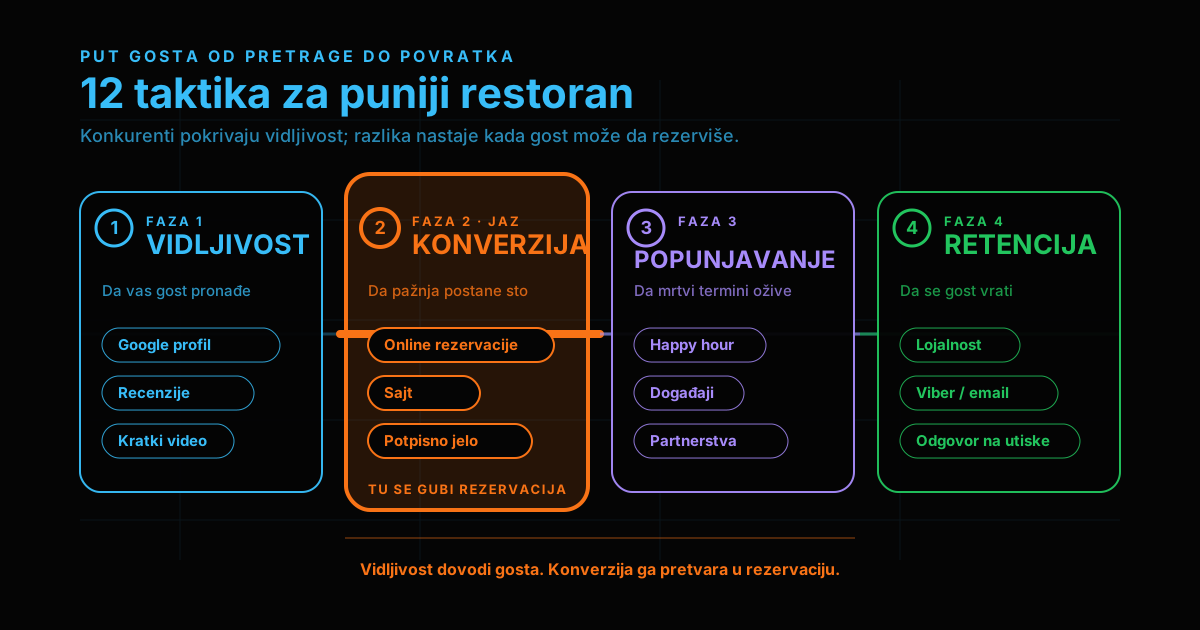
The fastest path to a fuller dining room runs through three steps: make guests find you, let them book in two taps, and give them a reason to come back. Most advice on attracting guests stops at the first step — getting noticed. But noticed isn’t booked. A guest finds you on Instagram on a Friday night, wants a table for four, and there’s nowhere to do it — so they go to the competitor who has a “Book now” button.
When we looked at what ranks on Google for “how to attract guests to a restaurant”, the picture was clear: the top ten is dominated by Croatian and regional articles, and none mention online reservations or a restaurant website as the channel that turns attention into a filled table. That’s the biggest opening, which is why conversion sits equal to visibility in this guide.
Below are 12 tactics, grouped into 4 phases of the guest’s journey: find you, decide, fill the empty slots, come back. Each one applies in Serbia, with examples from Niš and Belgrade.
Phase 1 — Make the guest find you (visibility)
Before any paid ad come three things the guest sees the moment they search “restaurant near me”.
1. Set up your Google Business Profile — category is factor number one
Your Google Business Profile is the biggest free lever you have.
The most common owner mistake: picking “Serbian restaurant” as primary because it sounds authentic. For ranking, that hurts. “Pizza restaurant” for a pizzeria and “Barbecue restaurant” for a grill house catch the exact searches guests type. “Serbian restaurant” goes in as a secondary, never the primary. For the deeper play on categories and photos, see our Google Business Profile guide for restaurants.
2. Collect Google reviews systematically, not by chance
Review count matters less than freshness.
Two things that work immediately: a QR code on the bill linking to your Google review page, and a Viber message the day after the visit while the impression is fresh. From our Wolt analysis of Niš — 229 restaurants hold 56,422 Wolt reviews, yet those same restaurants often have under 50 on Google. That asymmetry is a clean opportunity: guests already rate you, just in the wrong place.
3. Shoot short video for Instagram and TikTok
One phone and 30 seconds of a grill smoking does more than a polished promo spot from five years ago. Short vertical video — prepping the signature dish, a packed Friday night, a new dessert — reaches the local audience Google doesn’t cover. You don’t need editing, you need consistency: 2–3 clips per week.
Phase 2 — Make the guest decide (conversion)
This is where most Serbian restaurants lose guests they’ve already attracted. The attention exists, but the path to a reservation is broken.
4. Turn on online reservations — a “Book now” button on every channel
Once a guest decides, they want to book right then, from their phone, without a call. Nobody answers the phone during a rush, and “we’ll get back to you tomorrow” loses half of them. A “Book now” button on the Google profile, in the Instagram bio, and on the website turns that impulse into a confirmed table. Our reservation system takes bookings 24/7 through the website, Google, and WhatsApp, and sends the guest an automatic confirmation — without the phone ringing during service.
5. Build a website with the menu and your identity
An Instagram profile shows the atmosphere but doesn’t answer “what do you have and what does it cost”. A menu buried in a post from three months ago, the guest won’t find. A website holds the menu, hours, location, and a reservation button in one place, and gives Google the identity confirmation that lifts local rank. For context on what that costs in Serbia, see our breakdown of 7 public agency price lists.
6. Highlight one signature dish, not the whole menu
A guest choosing between five restaurants for the first time won’t remember a 60-item menu — they remember the one thing you’re known for. Grill over beechwood, house-made pasta, seasonal fish. Put that dish on the website homepage, in the Google photos, and in the first second of your video. One clear reason to come beats a long list.
Phase 3 — Fill the empty time slots
The weekend rush fills itself. Money leaks in the empty weekday hours.
7. Happy hour and off-peak offers
A special offer for low-occupancy periods — weekdays 3–6pm, Monday evenings — pulls guests in when the room would otherwise sit empty. You’re not discounting slots that fill anyway; you’re activating dead hours. A time-limited offer (“this week, veal soup 490 RSD”) beats a standing discount because it creates a reason to come now.
8. Host events and guest chefs
A guest-chef night, a wine tasting with a local winery, a themed dinner — gives guests a reason to book ahead and fills a slot you otherwise wouldn’t. Announce the event 72h ahead on your Google profile and Instagram, with the exact date and a reservation button.
9. Partner with local businesses
A winery, a brewery, a bakery, the boutique next door — cross-promotion with a business that shares your audience brings guests you’d never reach alone. A joint offer (“show a receipt from the coffee roaster next door for a free dessert”) costs little and opens a new channel.
Phase 4 — Make the guest come back (retention)
Bringing back an existing guest costs a fraction of acquiring a new one, and most restaurants in Serbia have no system for it.
10. Launch a loyalty program
Every fifth visit free, points, a birthday offer — a simple program gives the guest a reason to pick you over the competition. Birthdays pay off especially: most people celebrate out, and an offer sent a few days early (“we’d treat you to a cake for your birthday”) brings the guest back with company.
11. Build a Viber and email list for reminders
A guest who books once through the website leaves a contact. That list is your cheapest channel — a message about a new seasonal menu or an event goes straight to people who’ve already come in. Our social and messaging tool makes those posts and reminders for you, so one piece of content covers Instagram, Facebook, and Google at once.
12. Reply to every review and fix complaints fast
A reply to every review within 48 hours builds the picture of a restaurant that cares. A generic “Thanks for the rating” turns people off — the reply needs to mention a specific detail from the comment. A bad review handled publicly and graciously convinces future guests more than ten five-stars, because it shows how you behave when something goes wrong.
Which of these 12 first?
If you’re opening or just starting out, the order is clear: profile and reviews first (tactics 1–2), then reservations and the website (4–5), then retention (10–11). That’s the path the guest walks — find you, book, return. Visibility without conversion is wasted effort, and conversion without retention is a wheel you keep pushing from a standstill.
The biggest mistake isn’t a shortage of ideas — it’s that these 12 tactics scatter across five tools and three accounts nobody has time to maintain. That’s why our €59/month bundle pulls them into one: a website with reservations, the Google profile, social posts, and guest reminders, without you tracking five platforms. For the wider market picture, see our analysis of Serbia’s restaurant market for 2026.